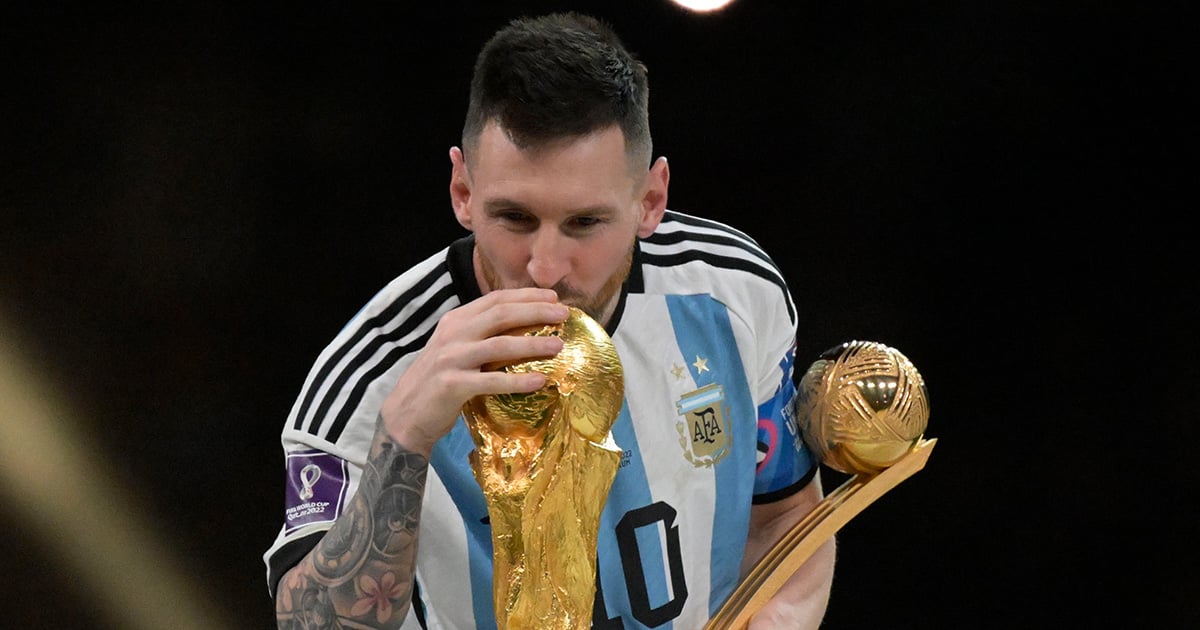

Erling Haaland is predicted to score 1,000 goals and become the greatest scorer in football history, according to former player and current TV analyst Jamie Carragher. Building on Carragher’s bold forecast, we analyze the statistics of the legendary Norwegian alongside Kylian Mbappé, who is progressing at a similar pace, to explore whether either can reach the milestones set by Cristiano Ronaldo and Lionel Messi.
There is a certain irony in the fact that one of the world’s top goal scorers hails from a country that was considered one of the least football-oriented just half a century ago. This shift underscores how much the football world has changed and why comparing today’s game to the past is no longer straightforward. Instead, we focus on the current era, where football has become more dynamic and higher-scoring. In this context, the Portuguese and Argentine geniuses offer compelling proof that scoring 1,000 career goals is achievable. But can our two protagonists follow suit?
Haaland’s Thousand
Across club and international matches, Erling Haaland has already netted 365 official goals (303 for clubs and 62 for the Norway national team). He still needs 635 more to hit the coveted 1,000 mark. Achieving this requires extraordinary consistency over many years. Carragher identifies this scoring reliability as Haaland’s defining trait and the key to his success so far. However, the challenge lies ahead: Haaland must maintain top-level performance until around 36–38 years old—meaning another 10 to 12 seasons.
Simple math shows that if Haaland plays for 12 more years, he would need to average 53 goals per season. Should his career span only 10 years, that figure rises to 62–64 goals annually, which is highly unlikely.
Let’s weigh the pros and cons. On the plus side, Haaland is currently scoring at a phenomenal rate, surpassing the pace set by Ronaldo and Messi at the same age. In the UEFA Champions League, he boasts an unprecedented average of one goal per game (59 goals in 59 matches). Additionally, the Norway national team has grown stronger and more prolific, adding to his tally. Haaland’s dedication to professionalism is remarkable—he is obsessed with diet, sleep, cryotherapy, and recovery methods, which could extend his career similarly to Ronaldo’s longevity.
On the downside, Haaland’s imposing physique (195 cm tall and over 90 kg) places significant strain on his joints and muscles. Chronic injuries are a major threat to his career longevity. Players with such powerful builds often struggle to maintain sharpness past 32–33 years old. Furthermore, Haaland’s game depends heavily on his style as a classic finisher, making his goal output reliant on the quality of his midfield service.
In summary, this Norwegian phenomenon has demonstrated his ability to score in any environment and will continue to do so wherever he plays—even if he ends up at Real Madrid. Whether his body can endure remains the key question. To maximize his longevity, Haaland might need to adapt his playing style to reduce the physical load on his legs. If he manages that, playing until 40 and reaching 1,000 goals is within the realm of possibility.
Mbappé’s Thousand
The French superstar of Real Madrid will turn 28 in December, which is a significant age in football terms. Although he began his professional career earlier than Haaland, Mbappé’s goal-scoring form has only fully blossomed in recent seasons. To date, he has scored 433 official goals (367 at club level and 66 for the France national team). He still needs 567 to reach 1,000. Maintaining elite performance without decline until around 38–39 years old (11–12 more seasons) is critical. This would require an average of 51–52 goals per season. If he retires earlier, say at 36 (after nine seasons), the average would jump to an astronomical 63 goals per year—an unrealistic target. Thus, a lengthy career is essential here as well.
The positives include Mbappé’s presence at one of the world’s top clubs, which offers an unparalleled platform to maximize his statistics. Being surrounded by world-class teammates ensures a steady stream of chances in La Liga and the Champions League. The France national team also consistently advances deep into tournaments, with Mbappé firmly established as their main scorer, as demonstrated in the last two World Cups. Moreover, Mbappé’s versatility is a major asset: he can score not only from close range but also from wide positions, long shots, and one-on-one situations, making him less dependent on midfield supply.
On the negative side, Mbappé’s greatest weapon is his explosive speed. This pace typically declines physiologically by age 31–32. To continue thriving, he will need to reinvent himself as a pure penalty-area striker, much like Ronaldo did. There is also the psychological factor: Mbappé’s personality does not endear him as much as Haaland’s, and the constant media pressure could lead to burnout by his mid-30s.
In conclusion, Mbappé can play until 40 only if he significantly evolves his football intelligence and accepts the role of a “finisher” operating deep in the opponent’s box without the ball. Since speed usually diminishes after 31–32, he has 3–4 years to adapt. He is already evolving—starting as a pure winger—and his ambition far exceeds Haaland’s, for whom football is pure enjoyment. Mbappé uses the game as proof of being the best in the world, which will fuel his desire to maintain his scoring output as long as possible.
To sum up, Messi and Ronaldo set a standard that now seems the new norm, but in reality, they remain exceptions due to their unique genetics and biomechanics. Mbappé and Haaland are more typical athletes, likely to follow the classic superstar trajectory: peak dominance until 33–35 years old, followed by a gradual decline. However, since their scoring rates match those of Messi and Ronaldo, if they stay fit and active until 39–40, both could reach the 1,000-goal milestone. The real question is how they will manage to sustain their careers for that long.